The race to develop Artificial Intelligence is perhaps the single most defining quest of our age. From Silicon Valley startups like OpenAI and Anthropic to titans like Google and Microsoft, the world is being rapidly reshaped by algorithms and data. But amid the breathless pursuit of the next breakthrough, a powerful new voice is cutting through the noise, offering a profound call for a pause, a reflection, and a redirection.
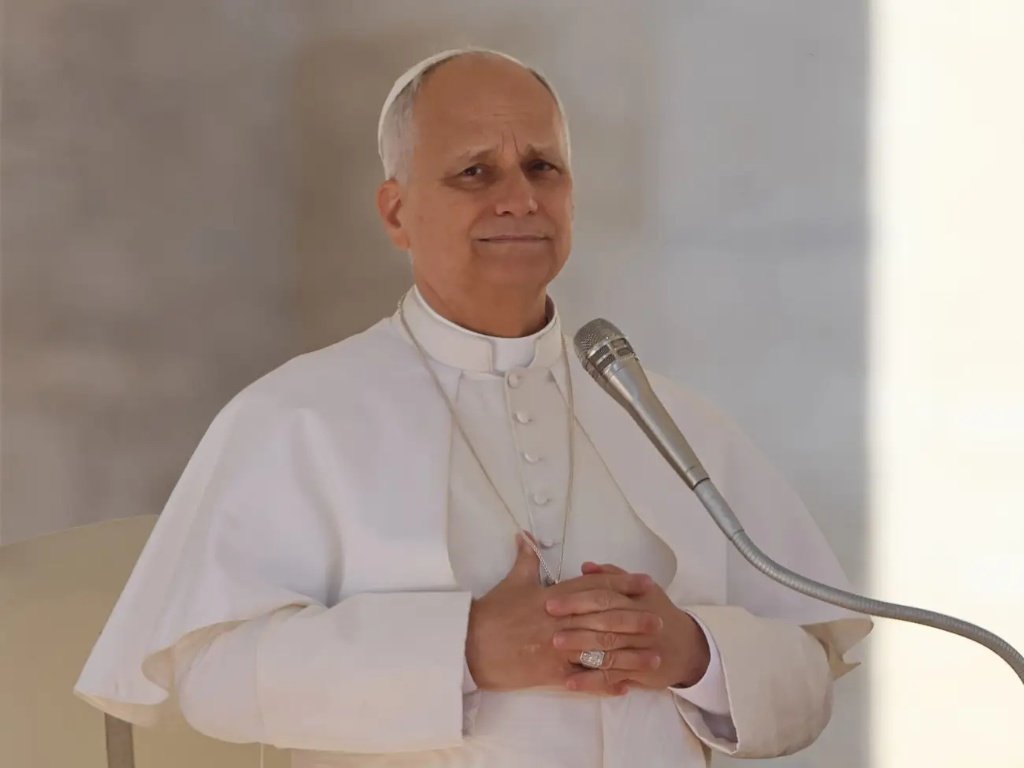
That voice belongs to Pope Leo XIV, the first-ever American pontiff, who has squarely placed the development of ethical AI at the heart of the Catholic Church’s modern mission. His recent message to the world’s technology leaders is direct: they must “cultivate moral discernment” in their work.
Why AI Has a “Spiritual Weight”
For many, the world of algorithms seems miles away from the walls of the Vatican. Yet, Pope Leo XIV—who, as Cardinal Robert Francis Prevost, was elected pope in May 2025—sees technology not just as a tool, but as a form of “participation in the divine act of creation.”
This is not a call for a slowdown or a rejection of progress. Instead, it’s a theological and ethical framing that argues that every design choice expresses a vision of humanity. If AI is built without intentional moral safeguards, it risks perpetuating and amplifying human biases, injustice, and greed.
In his X post, Pope Leo XIV was unambiguous about the necessary outcome, asking AI leaders to develop systems that reflect:
- Justice
- Solidarity
- A genuine reverence for life
This isn’t just theory. When a company designs an AI for healthcare, a faulty or biased algorithm can literally mean the difference between life and death. When an AI is used in education, its design reflects a fundamental belief about how human beings learn and grow. The stakes are simply too high to leave ethics as an afterthought.
Beyond the Lab: The New Catholic Church AI Ethics Movement
Pope Leo XIV has made it clear that this ethical challenge is a “profoundly ecclesial endeavor,” meaning the Church itself has a vital role to play. He sees the integration of technology and faith as essential to evangelization and the integral development of every person.
This signals a major shift. The Church is actively fostering a community—like the participants of the Builders AI Forum 2025—dedicated to ensuring AI products align with Christian principles.
“Whether designing algorithms for Catholic education, tools for compassionate healthcare, or creative platforms that tell the Christian story with truth and beauty, each participant contributes to a shared mission…” – Pope Leo XIV
This approach moves beyond simple condemnation or caution. It is a proactive engagement, asking: How can technology be a force for good?
The Challenge of Human Dignity and Justice
The Pope’s remarks arrive at a critical juncture. The rapid advancement of AI has stoked genuine public anxiety over its implications on society. Concerns aren’t limited to theoretical robots; they are focused on tangible threats to:
- Jobs and the economy: Rapid automation causing serious disruption.
- Human dignity: The use of AI in surveillance, social credit, and deepfakes.
- Justice: Biased data leading to discriminatory outcomes in lending, policing, and hiring.
Pope Leo XIV, continuing the legacy of his predecessor, Pope Francis, has consistently pointed to the challenge AI poses to “human dignity” and “labor.” He reminds us that the Church’s treasury of social teaching—developed in response to past industrial revolutions—is equally relevant to this new technological age.
The goal isn’t to stop innovation; it’s to ensure that the pursuit of being the “first to change the world” does not lead to forgoing safety protocols that could cause societal and even humanitarian disruption.
Cultivating AI Moral Discernment
So, what does it mean to “cultivate moral discernment” in a practical sense?
It means that the engineers, CEOs, and investors building this technology must adopt a human-centered design approach. It requires them to look beyond immediate profit or competitive advantage and deeply consider the long-term impact on the most vulnerable members of society.
This process involves:
- Interdisciplinary Teams: Integrating ethicists, theologians, and social scientists directly into the development process.
- Anticipatory Ethics: Proactively identifying potential harms before a product is deployed, not just reacting to problems afterward.
- Transparency and Accountability: Creating clear, explainable systems and establishing responsibility for AI outcomes.
Pope Leo XIV’s intervention is a timely reminder that technology is never neutral. It is an extension of human will, and therefore, it carries a spiritual and ethical responsibility. By asking the builders of AI to cultivate this inner moral compass, the first American pope is calling for nothing less than a new, more conscientious path forward for the entire technological revolution.